Gas Line Repair & Inspection in College Point, Queens
From boiler fuel line pressure testing and cracked black iron manifold repairs to code-compliant appliance connections, NY Plumbing ensures precision safety and full compliance with NYC Department of Buildings fuel gas codes.
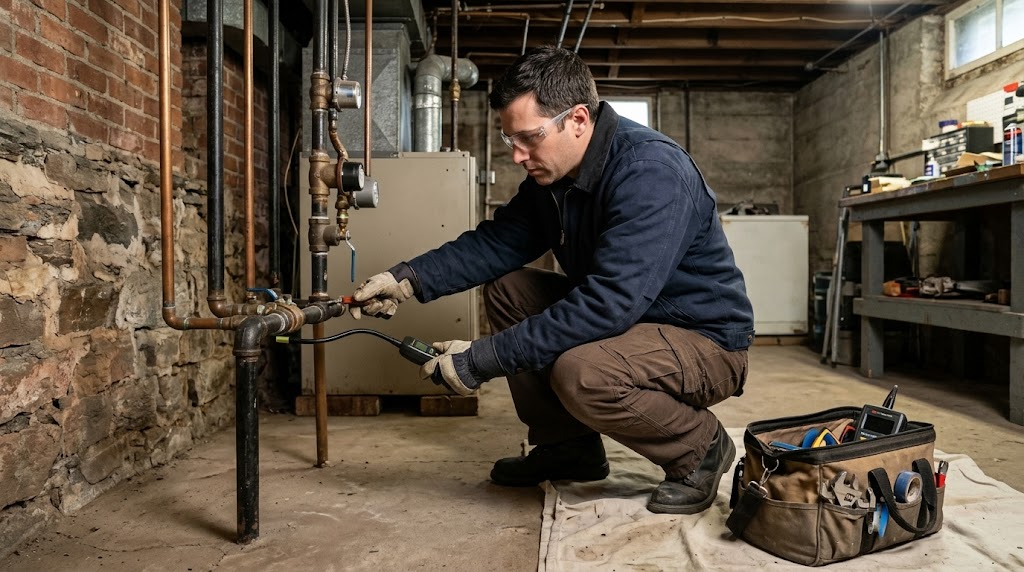
Common Gas Piping Issues in College Point Homes
Residential gas distribution systems consist of threaded black steel piping, shutoff valves, sediment traps, and pressure regulators. Over time, physical stress and moisture can compromise pipe integrity.
Corroded Black Iron Piping
In older Queens cellars with high relative humidity or seasonal dampness, unpainted black steel gas lines develop surface oxidation. Left unchecked, rust eats into threaded joints and creates microscopic vapor leaks.
Defective Appliance Valves
Older manual brass shutoffs and automatic boiler gas solenoid valves can experience internal diaphragm fatigue or dried lubricant seals, leading to low burner input, burner flutter, or failure to ignite.
Utility Red-Tag Restorations
When National Grid locks out gas service due to a detected leak or pressure loss, NYC DOB regulations require a Licensed Master Plumber to perform pressure tests, repair defects, pull permits, and file certification for service restoration.
Strict Standards for Gas Line Work in Queens
Under New York City Construction Codes, fuel gas piping is among the most tightly regulated mechanical trades. Any modification, relocation, or replacement of gas piping—from hooking up a new heating plant to replacing a deteriorated header—requires formal filing with the NYC Department of Buildings (DOB).
In College Point, where multi-family conversions and older detached homes exist side-by-side, adhering strictly to code is vital for safety. While single-family properties are exempt from mandatory periodic NYC Local Law 152 inspections, the physical standards for threaded connections, drip legs (sediment traps), and manifold supports remain equally stringent across all residential dwellings.
Faulty gas pressure or failing burner valves directly impair heating efficiency, frequently presenting as no-heat calls that require boiler repair in College Point. When installing high-efficiency equipment, our technicians coordinate gas supply capacity with full boiler replacement specifications and ensure fuel lines feeding your water heater meet precise volumetric demand.
NYC Authorized Gas Work Only
Never hire an unlicensed contractor or attempt DIY gas repairs. All gas piping installations, extensions, and pressure validations must be conducted by or under the direct supervision of an authorized NYC Licensed Master Plumber.
The Gas Testing & Repair Sequence
Safety and precision govern every phase of gas piping diagnostic and repair work in College Point.
Electronic Sniffer Survey
We utilize calibrated PPM (parts-per-million) combustible gas sniffers along all accessible pipe runs, joints, and appliance unions to pinpoint fugitive emissions.
Manometer Pressure Testing
We isolate downstream appliances and attach calibrated pressure test gauges to monitor pressure decay, proving beyond doubt whether the piping network holds gas-tight seal.
Sectional Piping Replacement
Corroded pipes, seized shutoffs, or improper flex connectors are removed and rebuilt using heavy schedule-40 black steel pipe and approved gas thread sealants.
DOB Certification & Turn-On
Upon passing high-pressure decay testing, necessary paperwork and DOB certifications are completed so the utility can safely unlock and restore gas service.
Gas Line & Inspection FAQs
Clear explanations of gas safety, testing standards, and NYC inspection rules.
Evacuate everyone from the property immediately. Do not flip light switches, use landline or mobile phones inside, or operate electrical appliances. Once at a safe distance outdoors, call 911 or the local gas utility (National Grid) immediately. Never call a plumbing contractor first during an active gas emergency.
NYC Local Law 152 mandates periodic inspection of exposed gas piping systems in all buildings classified under occupancy group R-2 (multi-family buildings with three or more dwelling units) every four years by a licensed master plumber. Pure single-family and two-family detached residences (group R-3) are currently exempt from the periodic LL152 inspection mandate, though all gas modifications must still be permitted and code-compliant.
Natural gas operates under pressure and carries severe fire, asphyxiation, and explosion hazards. New York City Department of Buildings (DOB) regulations strictly require that all gas line modifications, extensions, pressure testing, and boiler gas valve replacements be completed under the direct supervision of an authorized Licensed Master Plumber with DOB work permits.
Technicians use high-precision electronic combustible gas leak sniffers and calibrated pressure gauge decay tests. The system is isolated, pressurized with inert gas or air up to required NYC code levels, and monitored over a set period. Any drop on the gauge confirms an unsealed joint, threaded fracture, or corroded pipe section.
Schedule a Certified Gas Line Inspection in College Point
For non-emergency testing, boiler fuel line replacements, or utility lock-out resolution, speak directly with our team.