Pipe Leak Repair in College Point, Queens
From concealed ceiling drips and pinhole copper leaks to leaking hydronic boiler supply lines, NY Plumbing provides non-destructive acoustic leak detection and long-lasting pipe repairs across College Point, Queens.
Common Signs of Hidden Pipe Leaks
Not all leaks present as sudden geysers. Microscopic pinholes in copper pipes or weeping fittings can quietly saturate joists, drywall, and subfloors for weeks before showing surface signs.
Damp Drywall & Ceiling Stains
Brown water rings, bubbling paint, or softening sheetrock on ceilings beneath bathrooms or second-floor heating loops signal a persistent joint drip or corroded pipe nipple requiring immediate location and repair.
Unexplained Water Meter Spin
If all faucets, toilets, and hose bibs are shut off but the red leak indicator triangle or digital dial on your NYC DEP water meter continues to spin, a pressurized underground or concealed pipe leak is active.
Boiler Auto-Feed Activity
When a closed-loop hydronic heating system develops a hidden pinhole in baseboards or concealed risers, the automatic water feed valve frequently hisses as it injects makeup water to maintain system operating pressure.
Why Heating Pipe Leaks Threaten Boiler Longevity
In College Point residences, pipe leaks fall into two distinct mechanical categories: domestic potable water distribution and closed hydronic heating loops. While domestic water lines operate under continuous municipal pressure (45–60 PSI), hydronic heating loops operate at lower pressure (12–15 PSI cold, up to 20 PSI hot) with chemically conditioned, oxygen-depleted water.
When a hydronic pipe or zone fitting weeps, the automatic pressure-reducing feed valve continuously draws fresh, cold water into the boiler. Fresh tap water introduces dissolved oxygen and minerals directly into the cast-iron heat exchanger, triggering severe internal rust scaling and premature boiler casting failure that leads to an avoidable boiler repair in College Point.
If corrosion has compromised substantial sections of heating lines or equipment connections, complete replacement of affected runs may be required alongside a comprehensive boiler replacement. For leaks originating near your hot water storage tank, our technicians provide complete water heater repair services.
Immediate Emergency Water Steps
If safe, close the main water supply shutoff immediately. Do not touch electrical appliances or switches standing in pooled water. If water is entering heating or electrical panels, call for emergency plumbing isolation.
The Four-Stage Pipe Leak Diagnostic & Repair Process
We isolate the exact origin of water leaks using advanced non-invasive acoustic tools before completing durable copper, PEX, or cast-iron piping repairs.
Electronic Acoustic & Thermal Scan
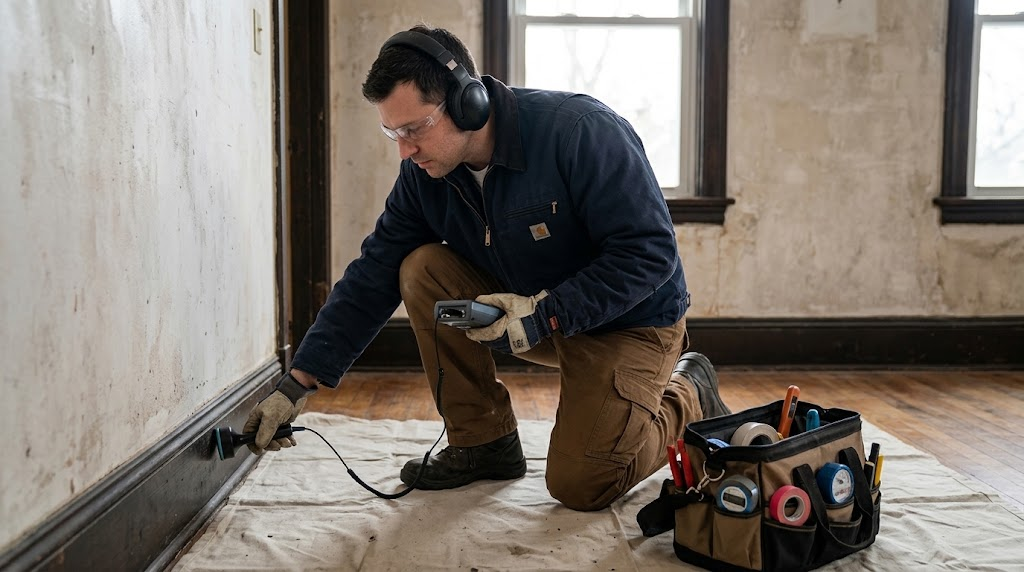
We utilize ultrasonic ground microphones and thermal imaging to pinpoint pipe leaks behind walls, under subfloors, or inside utility chases without destructive demolition.
Loop or Branch Isolation
We locate the closest operational shutoff or freeze-clamp the damaged line to stop water damage while keeping remaining domestic fixtures or heating zones active.
Precision Cut & Permanent Joint Fitting
Pinholed or fatigued pipe sections are neatly cut away and replaced using hard-drawn Type-L copper soldered with lead-free alloy, ProPress mechanical fittings, or heavy brass nipples.
High-Pressure Proof Testing
We pressurize the repaired line to full working pressure and monitor for pressure decay before bleeding trapped air and cleanly wrapping insulation.
Common Pipe Leak Inquiries in College Point
Guidance on emergency shutoffs, leak detection methods, and heating line repairs.
First, locate and close the main water shutoff valve near the street entrance or the local isolation valve serving that branch. Avoid stepping in pooled water if electrical wires or basement outlets are submerged. Turn off electricity to the wet zone at the main panel if safe to do so, and call for professional plumbing repair.
Domestic water leaks constantly drip fresh municipal water under 45–60 PSI of continuous line pressure. Hydronic heating loop leaks involve closed-circuit hot water (12–20 PSI) containing dark rust, magnetite sediment, or chemical inhibitors. A heating loop leak causes the boiler's automatic water feeder to continuously introduce fresh oxygenated water, accelerating interior boiler corrosion.
We use non-invasive acoustic leak detectors that amplify high-frequency sound waves of pressurized water escaping through pinholes, combined with high-resolution infrared thermal cameras that map warm or cold moisture gradients across sheetrock, tile, and concrete without destructive exploratory demolition.
Repair complexity depends on pipe material (copper, PEX, galvanized steel, or cast iron), physical accessibility (exposed basement ceiling versus buried beneath finished tile floors), whether asbestos insulation is present on legacy heating pipes, and whether localized spot soldering or complete branch re-piping is needed.
Dealing with a Leaking Pipe in College Point?
Speak with our technical team to locate and repair water distribution leaks or hydronic heating line drips promptly.