Sump Pump & Flood Protection in College Point, Queens
Shield your basement boiler room, mechanical controls, and foundation against coastal storm surges and rising Queens groundwater. NY Plumbing installs, repairs, and maintains submersible sump pumps, battery-backed dual systems, and sanitary backwater check valves across College Point.
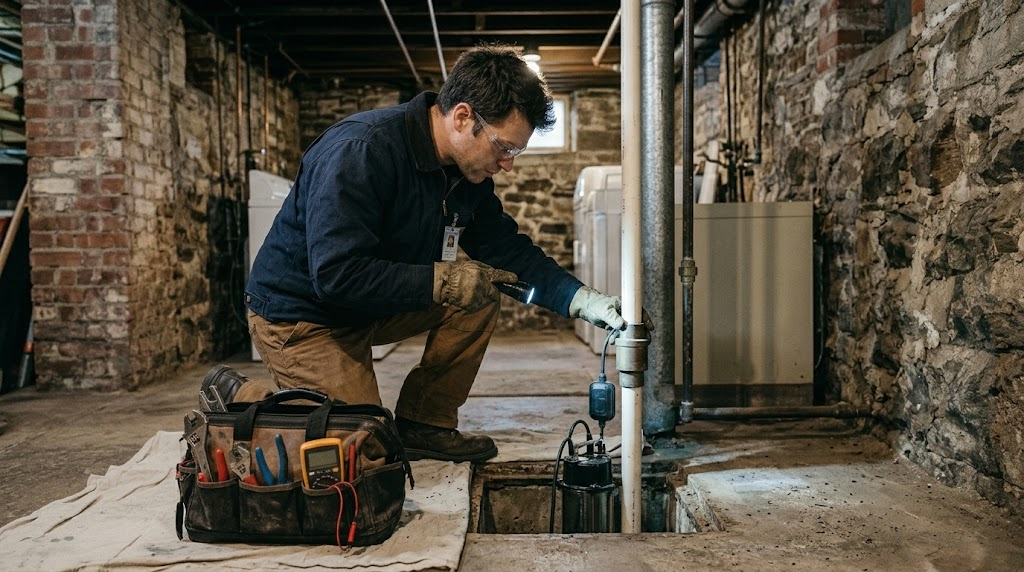
Critical Indicators of Sump Pump Failure
A malfunctioning sump pump often remains unnoticed until heavy rain arrives and water covers the basement floor. Routine inspection helps spot mechanical wear before catastrophic water damage occurs.
Float Switch Hang-Ups
The float switch is the most common mechanical point of failure. Mineral debris, pit displacement, or physical obstruction can prevent the float from rising freely, leaving the motor unpowered as water climbs out of the basin.
Continuous Motor Cycling
If a sump pump runs non-stop without emptying the pit, the impeller may be stripped, the check valve may be leaking water backward into the pit, or high hydrostatic pressure may exceed the pump’s gallon-per-hour rating.
Grid Outage Vulnerability
Standard 120V pumps stop immediately when severe weather trips local power grids. Without an auxiliary battery backup system, rising storm runoff quickly inundates lower living quarters and heating equipment.
Protecting Low-Lying College Point Basements
College Point forms a geographic peninsula bounded by the East River to the north and Flushing Bay to the west. Because much of the community sits near sea level, low-lying properties along 14th and 15th Avenues and near Powell's Cove Park face pronounced hydrostatic pressure against basement slabs and masonry walls.
When prolonged storms coincide with astronomical high tides, municipal storm sewers can become pressurized, preventing gravity-fed drainage from discharging cleanly. In these conditions, basement water intrusion can submerge heating boilers, water heater burners, and electrical switches.
A submerged boiler can short out electronic ignitions and destroy low-water cutoffs, turning water infiltration into an immediate boiler repair in College Point scenario. In older properties where sewer backups combine with surface water, we also evaluate lateral integrity through our sewer line repair service and inspect for hidden pipe damage with our pipe leak repair team.
Backwater Valve Protection
Installing an approved backwater check valve on the primary sanitary line stops municipal sewer backflow from entering your cellar during storm surcharges, working alongside your sump pump for multi-layered protection.
Comprehensive Sump Pump Evaluation & Setup
From evaluating water influx rates to sizing discharge piping and dedicated electrical circuits, here is how we ensure reliable basement water removal.
Basin & Influx Rate Assessment
We inspect pit diameter, perforations, and incoming French drain conduits to determine peak influx volume and confirm adequate pump displacement capacity.
Cast-Iron Submersible Sizing
We select commercial-grade cast-iron submersible pumps (1/3 HP to 3/4 HP) with solid vortex impellers that run cooler and outlast lightweight plastic models.
Dual Check Valves & Discharge Run
We install quiet check valves to prevent pumped water from slamming back into the basin, routing rigid discharge piping to a compliant exterior gravity grade.
Battery Backup & Alarm Integration
We integrate an auxiliary DC backup pump with a heavy-duty deep-cycle AGM battery and high-water audible alarm to ensure protection during primary power loss.
Common Sump Pump & Flood Inquiries
Realistic advice regarding basement flood prevention, pump maintenance, and backup systems.
Intense coastal rainstorms, nor'easters, and hurricane remnants frequently knock out local electric grid power right when basement water infiltration peaks. A secondary battery backup sump pump with a dedicated float switch and marine-grade power supply kicks in automatically during blackouts, preventing basement flooding and protecting boiler equipment.
A backwater valve is a mechanical one-way check valve installed on the main house sewer drain. During extreme cloudbursts when NYC municipal storm and sanitary sewers become surcharged, the flapper closes automatically, preventing city sewage and stormwater from forcing backward into your basement floor drains and fixtures.
No single mechanical device can guarantee zero flooding under catastrophic conditions such as storm surge overtopping foundation bulkheads or prolonged multi-day utility power failures exceeding battery capacities. However, a properly engineered dual-pump system with check valves and battery backup dramatically reduces residential water intrusion risks.
Because College Point has high groundwater tables, pumps cycle more frequently than in inland neighborhoods. We recommend a comprehensive inspection at least twice a year—once in late winter before spring thaw and rains, and once in late summer ahead of coastal storm season—to verify float operation, discharge check valves, and battery capacity.
Prepare Your College Point Basement Before the Next Storm
Speak with our technical team to schedule a sump pump diagnostic, backup system installation, or backwater valve evaluation.