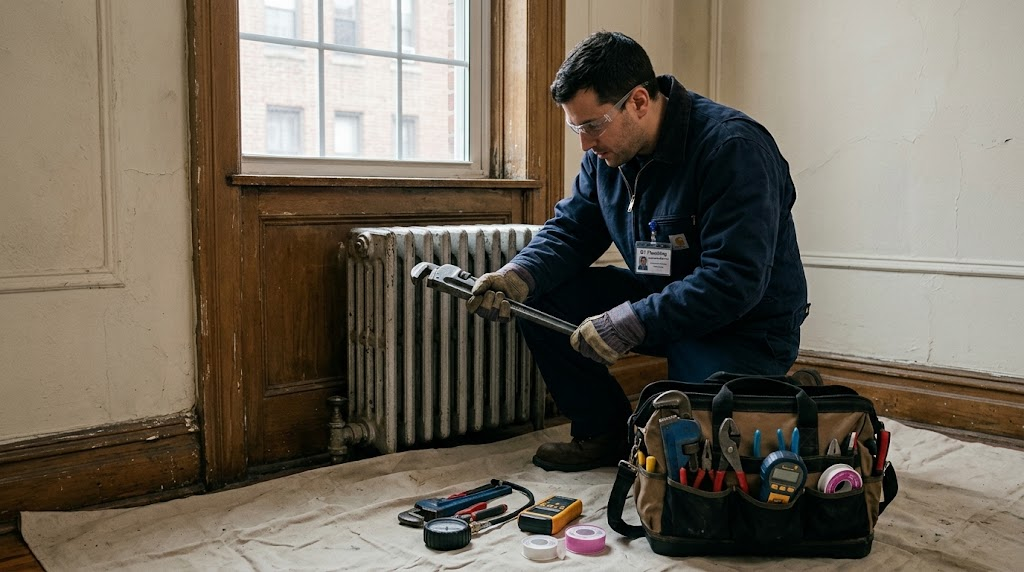
Restoring Balanced Steam Heat in College Point, Queens
Cast-iron steam radiators are an architectural hallmark of Queens housing, celebrated for delivering gentle, humid, radiant warmth. However, single-pipe steam systems rely on delicate pressure dynamics and gravity drainage. When air vents freeze shut, boiler pressure creeps too high, or pipe settling ruins natural drainage angles, rooms become noisy, unbalanced, or completely unheated.
NY Plumbing provides component-level radiator repair College Point Queens property owners trust. We troubleshoot cold radiators, replace corroded angle shutoff valves, correct floor pitch, and eliminate noisy banging pipes to restore quiet, even heating across your entire home.
Common Radiator Symptoms & Troubleshooting
Recognizing the root mechanical causes behind radiator malfunctions allows for targeted, cost-effective repairs:
Cold Radiators
When the boiler is running but a radiator stays completely cold, the air vent is almost always blocked by mineral scale or painted shut, trapping air that prevents steam from entering the cast-iron sections.
Banging Steam Pipes
Experiencing banging steam pipes College Point Queens indicates water hammer. Condensed water is trapped in sags or unpitched radiators, where incoming steam slams into water slugs at violent speeds.
Leaking Radiator Valves
Water pooling around the valve stem when steam rises points to dried graphite packing nuts, worn brass internal seats, or failing spud unions requiring professional repacking or replacement.
Hissing & Spitting Air Vents
High-pitched whistling or brown rusty water spraying from air vents signals excessive boiler steam pressure, worn bi-metallic vent discs, or excessive boiler water levels surging into headers.
Steam Radiator Valve Replacement & Spud Fitting
The primary shutoff valve connecting your steam radiator to the vertical pipe riser endures extreme thermal expansion cycles. Over decades, valve packing deteriorates, handwheels strip, and brass internal threads seize. Executing a steam radiator valve replacement College Point Queens requires precision spud wrenches to extract the tapered brass union from the cast-iron radiator tapping without cracking the antique casting.
We install heavy-duty, high-capacity steam angle valves built with PTFE packing glands and heat-resistant composition discs that provide complete leak-free shutoff and allow condensate to drain backward smoothly.
Single-Pipe Steam Golden Rule: Never Throttle Valves
In a single-pipe steam system, steam travels upward into the radiator and condensed water drains downward back through the exact same pipe. Radiator valves must always be 100% fully open or 100% fully closed. Turning a valve halfway restricts the pipe bore, trapping water and causing violent pipe hammer. If a room is consistently too hot, installing an adjustable thermostatic radiator air vent is the correct solution.
Radiator Pitch & Gravity Return Drainage
Steam cannot function without proper gravity drainage. Over time, wood floor joists in Queens homes naturally settle, causing heavy cast-iron radiators to tilt backward away from the supply valve. Condensed water pools in the back end of the radiator, reducing heated surface area and generating violent knocking each time steam enters. Our technicians use heavy-duty shims to re-establish a continuous downward pitch toward the supply valve, restoring quiet drainage.
Boiler Pressure Calibration & Main Line Vents
Many radiator problems actually originate down at the boiler. Residential steam systems are engineered to operate at low pressure (0.5 to 2.0 PSI). If the boiler pressuretrol is miscalibrated and pushes 4 to 6 PSI, radiator air vents lock shut under excessive force, preventing air release and starving top-floor rooms of warmth. During service visits, we calibrate boiler pressure controls and verify quick-venting main line vents in the basement to ensure rapid steam transit to every riser.
Stop Radiator Banging and Leaks Today
Eliminate noisy pipes, repair dripping radiator valves, and enjoy balanced winter warmth. Call our Queens heating specialists at (315) 202-8009.
Call (315) 202-8009Frequently Asked Questions About Radiator Repair
Loud banging (water hammer) occurs when high-velocity steam collides with pools of condensed water trapped inside pipes or radiators. This happens when radiators sag in the wrong direction, supply shutoff valves are only partially turned, or main basement return lines have lost their downward gravity pitch.
In a steam system, a radiator cannot fill with steam until existing cold air is expelled. If the radiator air vent is clogged with mineral scale, painted shut, or seized closed, air remains trapped inside, completely blocking steam from entering the radiator body.
In standard one-pipe steam heating systems, supply valves must always be 100% fully open or 100% fully closed. Throttling the valve halfway restricts the narrow pipe orifice, preventing condensed water from draining back to the boiler against the oncoming steam, resulting in violent hammering and spitting vents.
Residential steam heating systems are designed to operate at 0.5 to 2 PSI. If the boiler pressuretrol is miscalibrated and pushes pressure above 3 to 5 PSI, it forces radiator air vents shut before air can escape, causes spitting water, increases fuel consumption, and creates massive heating imbalances.